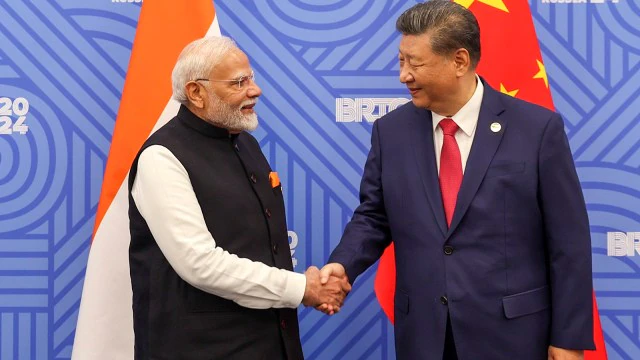


In a historic diplomatic breakthrough, India and China have come to a mutual agreement on new patrolling protocols along their disputed Himalayan border. This agreement, which comes after four years of heightened military tensions and multiple confrontations, is seen as a critical step toward normalizing relations between the two nations. The understanding was formalized in New Delhi after extended negotiations between senior officials from both countries. It lays the foundation for reducing troop presence in sensitive areas and establishing communication channels to prevent misunderstandings or escalations.
The Himalayan border, spanning nearly 3,500 kilometers, has long been a contentious issue between the two neighbors. The Line of Actual Control (LAC), as it is known, has been the scene of several confrontations in recent years, notably in 2020, when skirmishes in the Galwan Valley resulted in casualties on both sides, marking the deadliest encounter between India and China in decades.
The latest agreement involves measures to reduce military deployments, establish buffer zones, and create “hotline” communication channels to avoid unintentional clashes. According to India’s Ministry of External Affairs, this arrangement aligns with the “Five-Point Consensus” reached between the two countries in Moscow, emphasizing mutual respect, sensitivity, and restraint. Indian officials assert that this resolution is a diplomatic triumph, while Chinese representatives have lauded it as a significant move toward stabilizing bilateral relations.
The impact of this accord extends beyond military considerations, as both India and China have strong economic and cultural ties that have been strained due to the border issue. The trade relationship, once booming, has experienced slowdowns as trust diminished. Analysts believe that the restoration of border stability will likely open doors for further cooperation in sectors like technology, trade, and tourism. This development is also expected to influence regional geopolitics as other nations closely observe the two giants’ ability to manage their differences through diplomacy.
While the agreement is a major diplomatic success, both governments acknowledge that sustaining peace along the LAC will require ongoing dialogue and vigilance. India and China have thus far avoided formalizing a complete demarcation, but this agreement signals a willingness on both sides to prioritize stability, reduce risks, and invest in a future where border issues don’t define their relationship.
The border agreement represents not just a tactical move but also an evolving strategy to handle complex geopolitical realities in Asia, suggesting that India and China are increasingly interested in stable coexistence. However, experts caution that continuous, transparent engagement is essential to ensure this accord paves the way for long-term peace.