
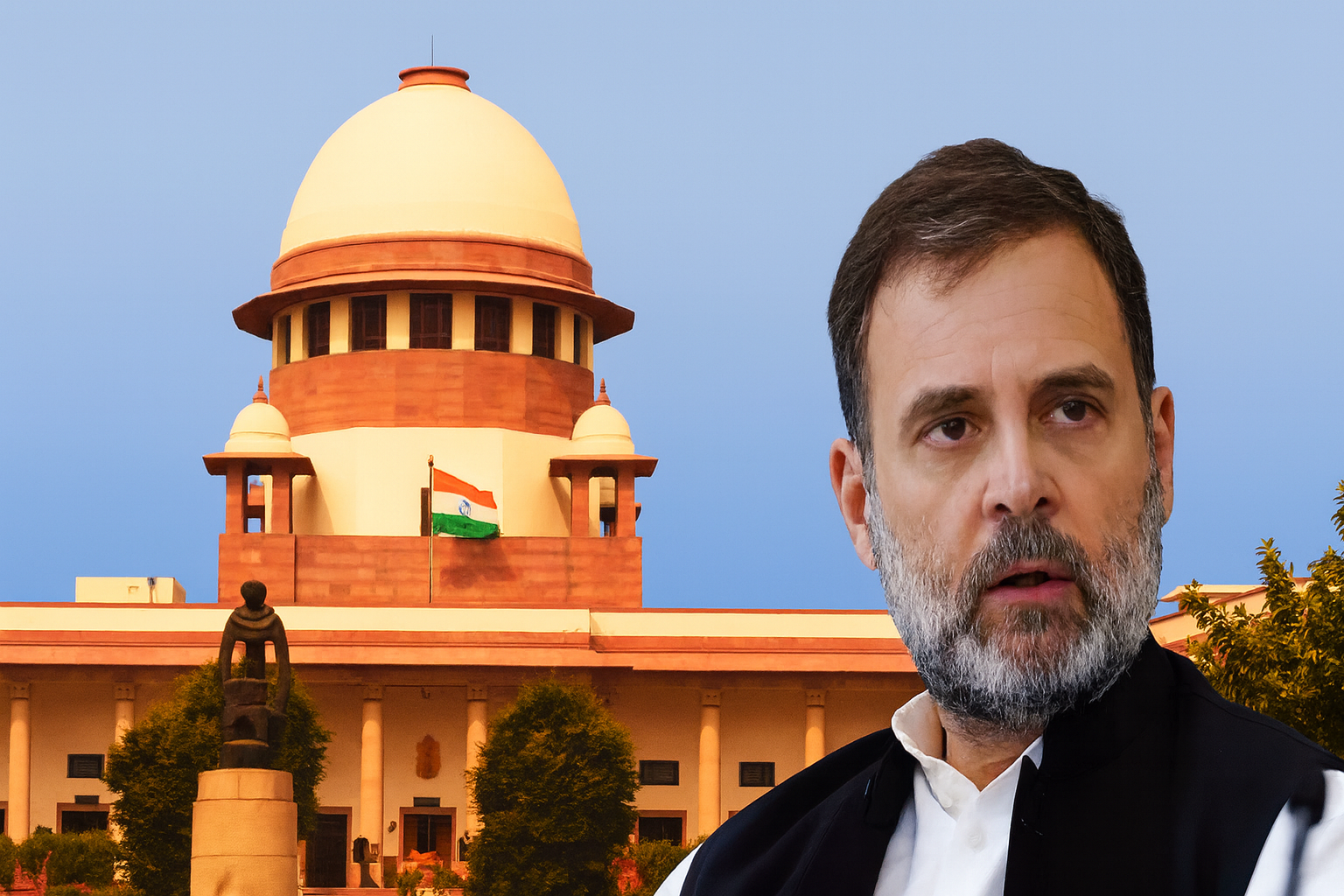
The Supreme Court of India has sharply reprimanded Congress leader Rahul Gandhi for his recent remarks regarding China, escalating the political battle between the BJP and Congress amid growing national security concerns.
In a statement during a recent public rally and subsequent judicial hearing, Gandhi criticized the government’s handling of ongoing border tensions with China, accusing the BJP-led administration of lacking transparency and resolve. His comments quickly drew vociferous criticism from the ruling BJP, which accused him of undermining India’s diplomatic position and damaging the country’s global image at a sensitive time.
During the Supreme Court hearing, the bench highlighted the gravity of political statements concerning foreign policy and national security. The justices noted that leaders “must exercise restraint and responsibility,” emphasizing that public remarks on such matters can have profound diplomatic consequences and potentially incite unrest or confusion among citizens.
Legal experts say the Supreme Court’s strong words signal a zero-tolerance approach toward irresponsible statements that could harm India’s diplomatic efforts, especially at a time when the country is engaged in delicate military and diplomatic negotiations with China at the Line of Actual Control.
The incident has become a flashpoint in the ongoing rivalry between India’s two main political parties. The BJP leveraged the controversy to question Gandhi’s patriotism and political judgment, while Congress leaders responded by framing Gandhi’s comments as legitimate democratic critique and a call for government accountability.
The issue quickly polarized public discourse. On social media, supporters of both the BJP and Congress launched hashtag campaigns and viral posts, with some defending Gandhi’s right to free speech while others denounced his timing and tone during a period of heightened border tensions.
Many political analysts believe the episode is emblematic of a wider trend in Indian politics, where issues of national security and foreign policy are increasingly central in public debate and election campaigns. With national elections on the horizon, such controversies are likely to shape campaign narratives and voter perceptions.
The Supreme Court’s intervention also raises wider questions about the boundaries of political speech in a democracy—especially when national security and international relations are involved. Democratic institutions are called to balance free expression with responsible discourse, ensuring robust debate without jeopardizing the country’s strategic interests.
Both BJP and Congress, in their public responses, reiterated their unwavering commitment to India’s security and sovereignty. However, the debate over political propriety and the nuances of foreign policy critique remains far from settled. As India continues to navigate its complex relationship with China, episodes like these underscore the importance of measured, informed, and united political discourse on issues that shape the nation’s future.