

Survivors Recount Night of Horror as Rescue Teams Battle Time and Weather in Uttarakhand Disaster Zone.
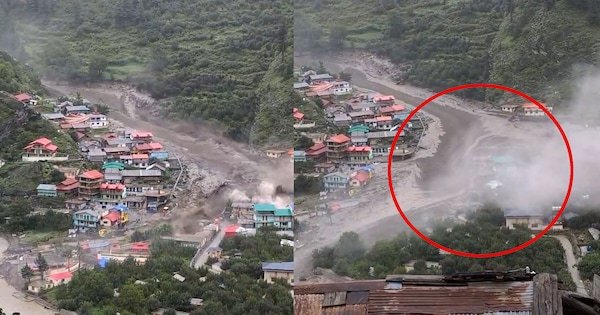
The quiet Himalayan village of Dharali in Uttarkashi district, Uttarakhand, was transformed into a scene of catastrophe on the night of August 4, 2025. A sudden, furious cloudburst unleashed a torrent of water, mud, and debris upon the slopes, swallowing up homes, hotels, shops and entire stretches of road. At least four deaths have been confirmed, with dozens more still missing as the local administration, Army, State Disaster Response Force (SDRF), National Disaster Response Force (NDRF), and numerous volunteers struggle to rescue survivors from under collapsed buildings and silt-mired terrain.
A Village Swept Away
Situated on the road to Gangotri, Dharali is usually bustling with pilgrims and trekkers in the summer season. On the fateful night, rainfall far above the seasonal average began pounding the higher reaches. According to meteorological data, more than 120mm of rain fell within a few short hours—a volume the region’s narrow mountain streams and earthworks could not withstand. By midnight, the river levels began to rise dangerously. Eyewitnesses reported walls of water smashing through gates and windows before residents could even react. “My family and I heard a thunderous roar and within minutes, water and rocks hit our house with terrible force,” recounted survivor Pushpa Rawat. Like many, she clambered onto her roof—her home, along with neighboring hotels and dhabas, soon swept away.
The entire lower segment of the village has vanished, local administration said, while segments of the main highway to Gangotri are buried under meters of mud, jammed with devastated vehicles and the rubble of collapsed bridges.
Rescue Teams Battle Elements
The scale of the damage quickly became apparent at first light on August 5. District officials declared a disaster zone, and multiple relief columns were dispatched. Army units, equipped for mountain operations, landed in isolated patches via helicopters when landslides made roads impassable. The SDRF and NDRF worked through the rubble, pulling out survivors—some miraculously unhurt after hours buried under debris, others suffering broken limbs, shock and hypothermia.
Chief Minister Pushkar Singh Dhami arrived in Uttarkashi for an aerial survey. He confirmed the scale of emergency, announcing ex gratia relief for the bereaved and injured, and promising long-term support for rebuilding.
Medical camps have been set up in unaffected school buildings. Priority is being given to reunite separated families. Relief workers are distributing food packets, clean water, and medications to prevent waterborne disease outbreaks.
Infrastructure and Communication Snapped
With communication towers and power lines down, contacting families or coordinating rescue became profoundly difficult. Satellite phones became the lifeline for remote command centers. Volunteers from neighboring villages assisted in relaying messages on foot, while the district control room managed operations from makeshift tents.
Tourists stranded in higher reaches above Dharali, on route to the Gangotri temple, have been rescued by foot via alternate routes. Several trekking parties relayed radio messages describing the scope of devastation far up the valley—evidence that the disaster’s impact is spread across a wider region.
Multiple Disasters in the Making
Further compounding the tragedy, authorities reported a second cloudburst and landslide at Sukhi Top, just a few kilometers away, threatening relief efforts and forcing further evacuations. Uttarakhand’s disaster management authority has placed adjoining valleys including Harsil and Bhatwari on high alert, as saturated earth and further forecasted rains heighten the risk of new landslides, potentially cutting off entire communities for days.
Environmental Concerns and the Bigger Picture
The disaster has reignited longstanding concerns about climate change, deforestation, and unregulated construction in ecologically fragile Himalayan zones. Experts say that warming global temperatures result in more erratic weather systems—with cloudbursts, seen as rare even a decade ago, now becoming more frequent and deadly.
Dr. Rahul Sharma, a climate scientist at Dehradun’s Wadia Institute of Himalayan Geology, explained, “The increased intensity and unpredictability of rainfall events are classic symptoms of climate-linked destabilization in the mountains. The region’s natural absorption capacity has been drastically reduced by deforestation and the encroachment on riverbeds.”
Calls have grown for immediate investments in early warning systems, real-time rainfall monitoring, and stricter enforcement of environmental regulations for construction and land use.
Resilience and Relief
Amid tragedy, stories of resilience abound. Local youth groups and voluntary organizations have formed bucket brigades, carrying essential supplies through mountain trails. NGOs like Goonj and Himalayan Environmental Studies and Conservation Organization (HESCO) have set up help desks to assist displaced persons in accessing government assistance.
National and international donations are beginning to flow in; online fundraising campaigns support logistics including fuel for relief trucks, blankets, and water purifiers. The district’s Sikh gurdwaras and Hindu temples have opened their kitchens, serving hot meals day and night.
Rebuilding and Long Road Ahead
While immediate rescue remains the top priority, local leaders and disaster specialists agree that rebuilding will take months, if not years. The twin blows to infrastructure and livelihood—especially for villagers, hotel owners, porters and guides dependent on the annual pilgrimage season—require a sustained recovery plan.
State and central government agencies have promised special packages; engineers from the Border Roads Organization (BRO) are already surveying to restore crucial transit routes and bridges before the onset of winter. Meanwhile, plans for more robust flood barriers, afforestation programs, and the construction of permanent evacuation shelters are in discussion.
Conclusion
The Uttarkashi cloudburst catastrophe stands as a chilling reminder of nature’s power—and the vital necessity for preparedness, respect for the environment, and solidarity in crisis. As survivors look to rebuild, their courage, the coordination of rescue forces, and the support of the nation will be key to recovery. For Uttarakhand, and other Himalayan states, lessons learnt in this moment must drive urgent reform in how India prepares for an era of mounting climate threats.