
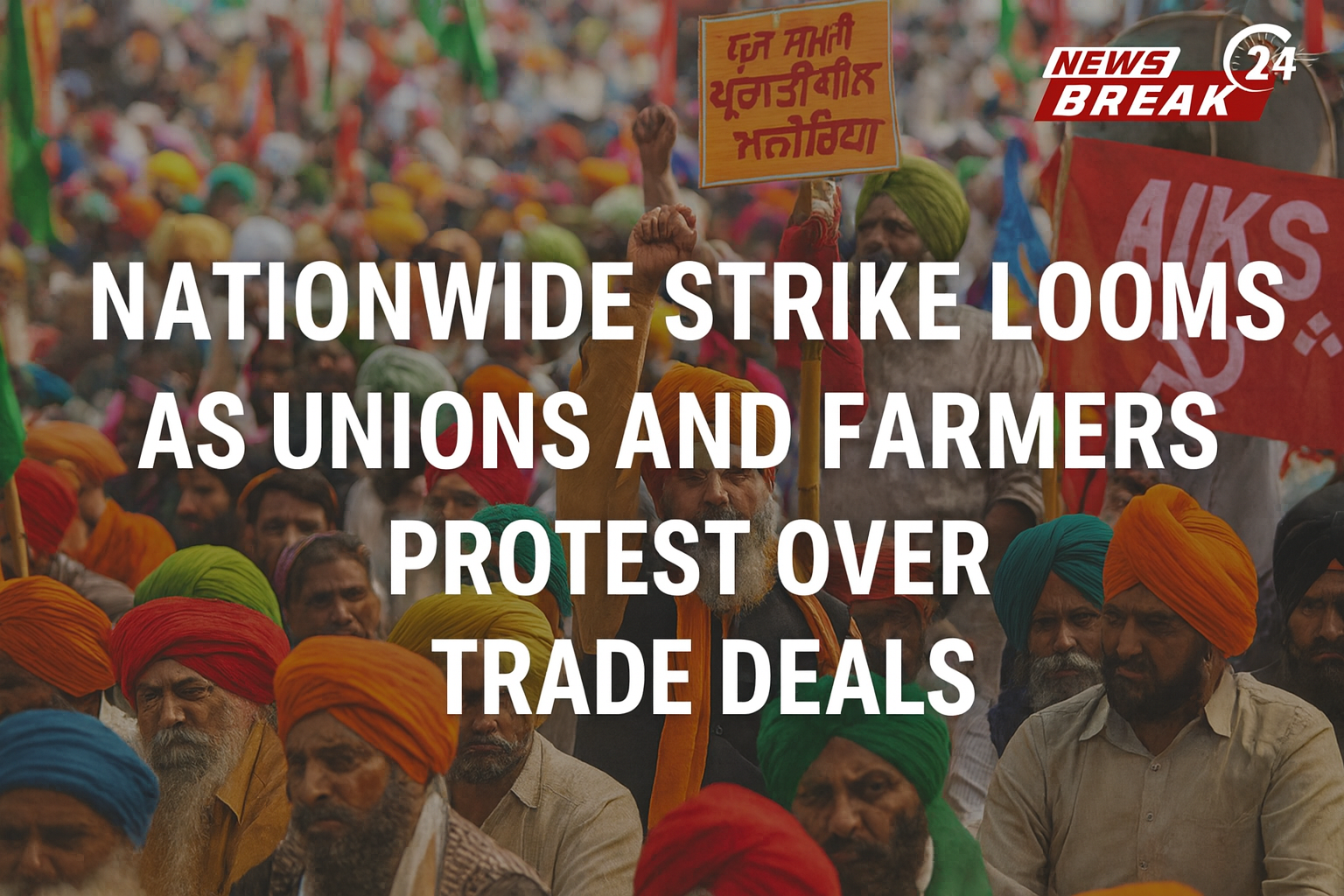
India stands on the brink of a significant nationwide protest, as major trade unions and farmers’ organizations have announced a strike scheduled for August 13, protesting recent trade agreements, including the India-UK Comprehensive Economic and Trade Agreement (CETA) and new US-imposed tariffs.
The protest movement is rooted in concerns over the potential negative impacts of CETA and other free trade deals on India’s agriculture and labor sectors. Unions and farmers argue that these agreements could undermine local protections, expose domestic industries to unfair competition, and threaten millions of livelihoods—especially among rural and small-scale producers.
Leaders from the protesting organizations have criticized the government for what they describe as inadequate consultation with stakeholders before finalizing important trade policies. There is mounting fear among agricultural communities and labor groups that rapid liberalization could exacerbate income inequality and disrupt rural economies.
Scheduled protests are expected to affect both urban and rural centers, with demonstrations planned across major metropolitan hubs such as Delhi, Mumbai, Kolkata, and Bengaluru. Organizers anticipate extensive participation from the farming community, worker unions, student bodies, and civil society groups.
The unions’ demands include fairer trade terms, the protection of domestic industries, increased government subsidies for farmers, and stronger labor rights. Many farmers are also calling for guarantees on minimum support prices (MSP), better access to domestic and export markets, and safeguards against the growing influence of multinational corporations in Indian agriculture.
The Indian government has acknowledged the right to peaceful protest but maintains that its trade policies are crafted to fuel economic growth, attract foreign investment, and integrate India more closely with the global economy. Officials reiterate that these measures are essential for advancing modernization and creating new opportunities, but promise ongoing dialogue with critical stakeholders.
Economic experts caution that a prolonged or widespread strike could disrupt supply chains, urban services, and retail operations, with potential knock-on effects for the wider Indian economy. At the same time, many highlight the importance of ongoing conversation and compromise to ensure trade agreements promote both national growth and social equity.
This planned nationwide strike represents the latest flashpoint in India’s continuous effort to balance globalization, trade liberalization, and the protection of vulnerable sectors. The coming weeks will be crucial for testing both government resolve and the unity of the protest movement, with the outcome likely to have significant implications for economic diplomacy and social stability.