

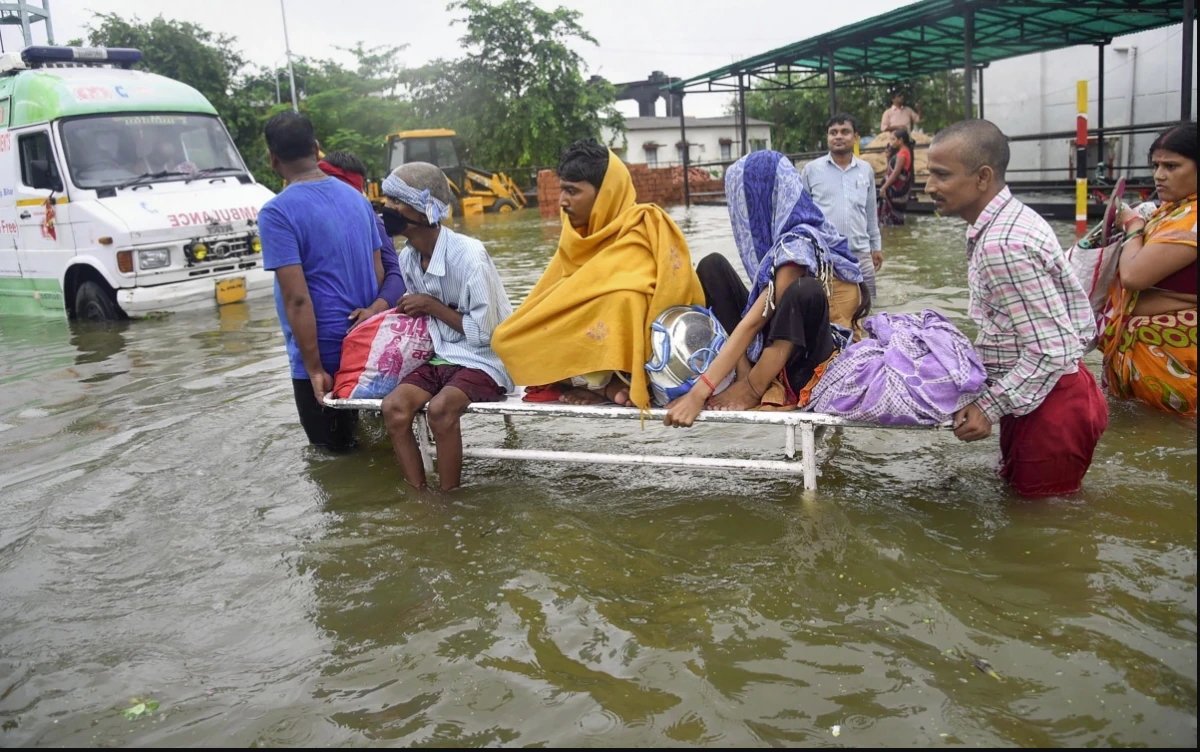
As the monsoon season intensifies, massive floods have wreaked havoc across Uttar Pradesh, displacing thousands of residents and triggering urgent emergency response efforts from both state and central governments.
Floodwaters have inundated large swathes of low-lying areas, damaging homes, agricultural land, and critical infrastructure. Rescue operations are ongoing to evacuate affected populations and provide them with essential relief—including food packets, clean drinking water, and medical aid via camps set up in higher-ground localities. Schools and public buildings are being used as temporary shelters for families who have lost their homes in the deluge.
The crisis has prompted Bihar to announce a significant overhaul of its domicile policy, specifically focusing on streamlining teacher recruitment and promoting local employment opportunities. This policy reform is broadly seen as a progressive intervention, not only responding to the immediate needs of flood-hit regions but also addressing longstanding educational gaps and economic disparities that natural disasters often expose.
Meanwhile, the Delhi Assembly convened its annual monsoon session with a legislative agenda clearly shaped by the widespread flooding and its repercussions. Lawmakers introduced bills emphasizing urgent education reforms, citywide infrastructure improvements, flood-prevention measures, and enhanced school safety protocols in light of the crisis. The need for robust disaster preparedness and strong public health measures dominated the session’s debates.
Simultaneously, longstanding farmer protests swelled at Delhi’s borders, with the weather compounding an already tense standoff over agricultural policies. Farmers’ unions are demanding revisions to market access regulations, increased guarantees on minimum support prices (MSP), and more transparent disaster relief for those whose crops have been lost to the flooded fields.
State officials across the affected region underscore the importance of coordinated responses among disaster management authorities, local administrations, and social welfare departments. Relief distribution, health checks, and sanitation efforts are being intensified to prevent outbreaks of waterborne diseases while rebuilding efforts begin in less-inundated areas.
Many climate experts point to the intensification and unpredictability of monsoon floods as evidence of broader environmental shifts and warn of the pressing need for long-term adaptation measures. “We must integrate climate resilience into every phase of policymaking—from city planning to agricultural insurance,” said a leading disaster management official.
Communities affected by the floods have shown extraordinary resilience and communal solidarity. Volunteers, NGOs, and civil servants are working side by side, but leaders acknowledge that full recovery will require sustained resources, federal support, and the political will to implement forward-thinking policies.
This season’s floods—compounded by policy reforms and social protest—offer a snapshot of India’s intertwined challenges of disaster response, governance, and rural advocacy. The path to rebuilding will require not only immediate intervention but transformative, inclusive strategies across sectors.